go to MSN.com
  autos     money     sports     tech     more    
  MSN home  |  Mail  |  My MSN  | 

Fox Sports Guide to Rugby

by Liam O'Hagan, FOXSports.com


add this RSS blog print
Updated: December 21, 2007, 10:57 AM EST
Rugby is a game played with an oval ball that is both handled and kicked.

It played as one of two codes, Rugby League and Rugby Union, which are as similar to each other as American and Canadian football, but have a contentious history. Union is the more-global code and is played in colleges and clubs throughout the USA. When Americans talk about rugby they are invariably taking about union.

Rugby Union is a 15-man-a-side game. Each team has eight forwards, who are typically involved in close-quarter action, and seven backs, who cover positions on the rest of the field. Each position has an associated jersey number and a well-defined role. The same individuals play offense and defense. Generally, the team with the dominant forward pack is favored in terms of securing possession of the ball, and playing with forward momentum.

Games are played over two 40-minute halves. Unlike soccer, there is no stoppage time added for injury breaks at the end of the half. Instead, the referee will call time off to stop the clock for injuries, disciplinary matters or television adjudications of scoring plays during the half. These time-outs are at the discretion of the referee and the clock is not a dominant feature of the game like it is in American football.

The Principles

The rules of rugby are constantly changing, including some major revisions under consideration for 2008, but there are some key principles to the game audiences need to understand:

  1. Players should remain between the ball (or the cross-field line running through the ball) and their own goal line. Generally if a player is ahead of the ball, he is in an offside position and is not allowed to participate in play. However, the exact point of the offside line moves depending on the situation.
  2. It follows from this that the ball may not be passed forward. It can be kicked forward, but players ahead of the ball when it is kicked may not contest it. If a player fumbles the ball and it goes forward towards the opponents' goal line, it is called a 'knock-on' and the opposing team gets an advantage.
  3. The referee can play advantage. The principle of advantage is that if one team commits a foul or makes a mistake the other team should have the opportunity to profit from it in general play. The referee will call "advantage" and later at his discretion he can say the attacking team has had their advantage and should play on ("advantage over"), or no advantage was forth coming at which point the referee will restart play from the site of the original offence or error.
  4. There is not a limit to possession like there is in American football. A team can retain the ball for an unlimited number of "phases" (equivalent of downs) even if it is not progressing up the field. Of course, the longer a team possesses the ball, the more likely it is to find a hole in the opposing defense.
  5. Players should remain on their feet. Often players will form a pile on the ground, particularly following a tackle, but almost always the player on his feet in this situation has rights to the ball.
  6. Players may not tackle each other without the ball. Blocking or obstructing players is also forbidden.
  7. Players can remain bound to each other by having an arm around a teammate. This is important in various close-quarter situations, and is one of the few ways a player can legitimately be ahead of the ball and still involved in the play.

Scoring plays

French wing Cedric Heymans just maintains control of the ball to score a try against Scotland. (JACK GUEZ/AFP / Getty Images)
The Try
This is the equivalent to a touchdown, but the offensive team must ground the ball on or behind the defenders' goal line, rather than simply having the ball break the plane of the goal as in American football. A try is worth five points. Originally it was worth no points and simply functioned as the way teams earned a "try" at kicking a goal. The referee can award a penalty try if he considers the defending team illegally prevented a try from being scored.

The Conversion
A conversion is a place-kick goal, which is attempted following a try. It is worth two points and is taken from a point in the field in line with the point in the goal at which the try was scored. A try scored by the corner flag results in a more difficult conversion from near the sideline, which is why players will attempt to run towards the goal posts before grounding the ball for a try. The conversion from of a penalty try is taken in front of the posts.

The Penalty Goal
If the referee awards a long-arm penalty, the benefiting team has the option of a place kick at goal. The team's designated kicker (usually No. 10 or No. 15) will place the ball on a kicking tee and try to kick it between the goal posts and over the crossbar. A penalty goal is worth three points.

The Field Goal
This is also called the drop goal, because it involves a player dropping the ball and kicking it as it hits the ground. The ball must clear the crossbar between the goal posts. A drop goal is attempted from open play and is worth three points.

Restart plays

The Kickoff and Restart

This is a drop kick from the center of the field to start each half or to restart the game after a team has scored. It must travel 10 meters on the full before the kicking team can touch the ball.

The Dropout
This is a drop kick taken from behind a team's 22-meter line. The ball must cross the line before the kicking team can contest it.

The Tap Kick
This is when a player kicks the ball to himself and starts running. It is a quick way to restart the game while the opposition is still retreating after being penalized. It is also used after a player has taken a mark or the referee has awarded a short-arm free kick.

South African Springboks scrum training. The heads of the locks can clearly be seen between the front rowers. The flankers are on the sides, and the No. 8 is at the back. (Tertius Pickard/Gallo Images / Getty Images)
The Scrum
This involves the team's forwards linking up in formation and engaging the other opposing forward pack. The team that feeds the scrum is expected to win it. If the opponents win the ball it is called a 'tight head'. The other key to the scrum is to win the ball with your team pushing forward. A scrum is usually awarded following a knock-on, a forward pass or a tackle situation when the referee judges the ball cannot be played safely. If a team crosses their opponents goal line, but the referee can't confirm if a try has been awarded, the team gets a scrum on the five-meter line.

The offside line at the scrum runs through the feet of the last player from a team in the scrum, or in rare cases the goal-line, although the opposing half-back (scrumhalf) may venture to the other team's offside line. Forwards who unbind from the scrum before it is over, are penalized. If a team wheels the opponents scrum through 90 degrees before they clear the ball a new scrum is set with a change in feed.

The Lineout
This is used to restart play after the ball or the player carrying the ball has gone into 'touch' or outside the field of play. The lineout forms where the ball/player went out. If that is within five meters of the goal line, then the lineout forms at the five-meter line. The typical lineout involves the hooker (No.2) throwing to the other seven forwards, who form a parallel line with the opposing forwards. The team that didn't put the ball out gets the advantage of throwing it in, but lineouts tend to be more competitive than scrums.

Teams that are disadvantaged in the lineout will often try to minimize this by calling a short lineout (with fewer players competing for the ball), taking a quick throw in before the lineout forms (players need to use the ball that went out, and take the throw from a point between where it when out and their own goal line.) or not kicking the ball out and giving the opposition control of lineout. This often results in kicking duels.

The offside line at the lineout is 10 meters back. Only the hooker, players in the lineout and a designated receiver (usually the half-back) may be within this offside line.

Penalty and Free-kick

The Penalty (signaled with a long straight arm) is a more severe punishment than the free kick, which is signaled with a short crooked arm. The Penalty gives the opposing team the right to have a place-kick at goal, or kick the ball to touch and retain the put-in to the following lineout. The attacking team can also elect to tap-kick the ball or call a scrum. A free-kick is a simple change in possession and the team awarded it usually opts for tap-kick restart.

Open-field plays

The Tackle

Only the ball-carrier can be tackled. Blocking other players and tackling without wrapping the arms around the ball-carrier are illegal. The ball carrier is tackled when he is both held and put to ground (a knee on the ground). Once on the ground the ball-carrier must either:

  1. Score a try by reaching over the try line, or having his momentum carry him over,
  2. Pass the ball,
  3. Place the ball on the ground, usually behind him so it is more easily available to teammates.

Following the tackle, the tackler and the player tackled have to get on their feet before they can play the ball. Other players have to play the ball from their feet and their team's side of the tackle. Generally, defenders have to be quick to get their hands on the ball before a ruck forms. Once the ruck forms the defenders have to release the ball.

The Welsh defence forces a turnover after the Australian ball ends up on the wrong side of a ruck. (Krystle Wright / Getty Images)
The Ruck

The ruck is an integral, but messy part of the game, where the interpretation of the rules can be the most contentious.

A ruck usually forms quickly following a tackle when one player from each side is bound to each other over the ball, although it is usually up to the referee to call when a ruck has formed. At this point, one team will attempt to drive the other off the ball in a combined wrestling match. Usually that is not possible, and the ruck becomes a close-quarter battle, to get access to the ball, that resembles a pile of bodies. The act of rucking, which is raking the ball with your feet, is becoming less common in the game, given the propensity for players to ruck things other than the ball.

At the ruck, the defending team aims to drive the opponents off the ball or at least slow it down without committing too many defenders to the ruck. The attacking team wants to get the ball out of the ruck as quickly as possible, before the retreating team can organize its defense.

The most common offences at the tackle and ruck are:

  1. The tackler lying on the ground preventing the attacking team from getting the ball. This results in penalty and will often be signaled by the referee telling a player to roll away.
  2. The tackled player not releasing the ball. If the tackler is isolated and doesn't let defenders take the ball off him, he will be penalized.
  3. Offside. Once the ruck has formed, players may only join from behind the hindmost feet of a teammate. Players who are not in the ruck must also stand behind this line until the ball is cleared.
  4. Sealing off the ball. Players must remain on their feet so diving over the ball to seal it off from the opposition will be penalized.
  5. Slowing the ball down. The defending team will often try to prevent the attacking team from recycling the ball quickly. This is a gray area as a defender on his feet can play the ball with his hands during the tackle, but once an attacking player joins the fray to form a ruck, the defenders must let go, as they are not allowed to use hands in the ruck. To further complicate things, if the ball is on your side of the ruck you can use your hands to pick it out of the ruck to play on.

The Maul

A maul is like a ruck except the ball is off the ground. Players must remain bound to teammates in the maul and can only join from behind the hindmost feet of their last bound teammates. A maul usually forms following a lineout or a tackle when the ball carrier is held and not grounded. The onus is on the team in possession to keep the maul moving forward or to smuggle the ball out of the maul. Once the maul stops moving, the attacking team has to get the ball out ('use it or lose it'). The defending team may not collapse the maul by pulling players within it off their feet.

The Kick

Players can only kick the ball out on the full if they are behind their 22-meter line. If they are forward of that and kick it out on the full, the lineout forms at the point where the ball was kicked. If players are in defensive positions they will often kick the ball long down the field in an effort to better their team's field position. More attacking kicks include:

  1. The Grubber, which is kicked along the ground behind the defending team so the attackers can run onto it.
  2. The Up and Under, which is a high kick designed to give the chasing team time to arrive and contest catching the ball.
  3. The Chip, which is a short kick over the defending team so the attackers can run onto it.
Players are allowed to charge down kicks with their hands without knocking the ball on, and a defending player who catches the ball on the full inside his 22-meter line can call a mark, which is the equivalent to free kick.

The Pass

A pass in rugby must go behind, or level with the player making the pass, like a lateral in American football. Passing is integral to the game and a well-timed pass can put a player into space.

Key Strategy

The attacking team will often set up as many phases of possession as it can, hoping to catch the defense out of position. In open play each 'phase' of possession usually results in a ruck (also called the breakdown) or maul, and often the attacking team will try to set up several rucks in quick succession. Usually this starts with forwards picking the ball out of one ruck, and driving forward to set up another ruck ('pick and go'), or having a forward receive the pass from a ruck and do the same thing.

Ideally, each new ruck is further up the field than the previous one. This is called 'crossing the advantage line'. If a player is tackled behind the advantage line, his teammates have to retreat behind the tackle before joining the ensuing ruck, which makes it easier on the opposition. For the same reason, driving the ball-carrier backwards in the tackle is advantageous to the defense.

The line break is the ultimate way of crossing the advantage line. Once the first line of defense is breached, the attacking team has a huge advantage at the next breakdown (tackle and ruck) as most of the defenders are retreating. This is why the grubber and chip are attacking kicks, because they turn the defending team around.

From the defensive position, the aim of the game is to force a turnover in possession, by either:

  1. Stealing the ball in a tackle, ruck or maul.
  2. Forcing the attacking team out of the field of play.
  3. Hoping the attacking team makes a mistake, such as a knock-on, forward pass or a pass that can be intercepted.
  4. Putting the attacking team in a position where they have to kick the ball.

If the defenders cannot force a turnover, they will try and slow the ball down at the ruck to give their teammates more time to line up in defense. Defenders will often commit a professional foul in order to stop the ball coming out of a ruck, especially if the defense is stretched by several phases of play. Repeated offenses like this can result in the referee producing a yellow card. Unlike soccer, this is not only a last warning, but results in the offending player spending 10 minutes on the sideline in the sin bin.

Positions

Player positions shown on a rugby field. Red team is attacking left to right and has just fed into a scrum. The red backs (No.10-15) are in staggered attacking formation. Black backs (No.10-14) are in flat defensive formation with the fullback (No.15) behind the line covering kicks or line breaks. At the scrum, red hooker (No.2) is closer to the feed than the black hooker. Openside flankers (No.7) are in position to cover the majority of the field. The blindside flankers (No.6) cover the narrow part of the field where attack is less likely. The black No.8 is packed between the flanker and the lock ready to defend the openside. The black halfback (No.9) is ready to be first line of defense. He must remain behind the offside line running through the feet of the red No.8. The other black backs must remain behind the offside line that runs through the feet of their No.8. The other forwards must remain bound to the scrum to remain onside. ( / FOXSports.com)

The Forwards: Numbers 1-8

The Front Row

The Props wear numbers 1 and 3. Their job is to prop up the scrum and to lift jumpers in the lineout. The ball is fed into the scrum from the side where the attacking team's prop is on the outside, the loose head.

The Hooker wears number 2. His job is to hook the ball back through the scrum with his foot. The hooker will signal when he is ready for the ball to be fed into the scrum by waving the arm bound around his loosehead prop. The hooker also throws the ball into the lineout.

The Second Row
The locks wear jerseys 4 and 5. They lock the scrum by binding behind the front row, head between props and hookers hips so they can push forward. The locks are usually the tallest players on the team and are responsible for catching the ball during a lineout or after a kick-off.

The Back Row/Loose Forwards

Back rowers wear jerseys 6, 7 and 8. The form the back row of the scrum and are the most loosely bound to the scrum. The primary role of the loose forwards is to contest tackles and rucks. The openside flanker (No. 7) is usually the fastest of the forwards and is charged with being the first player to arrive at a tackle. This is one of the most important positions in rugby, as controlling the tackle has such a huge impact on possession of the ball. The blindside flanker (No. 6), who binds on the side of the scrum closest to the sideline, is usually less mobile than the openside and often acts as a third lineout jumper. Of the three loose forwards, the No. 8 is usually the largest, as they often have to pick the ball from the base of the scrum and drive forward with it.

The Backs: Numbers 9-15

The Halves

The Half-back or Scrumhalf (No. 9) acts as the link between the forward pack and the backline, passing the ball from the base of the scrum, ruck, maul or lineout to the backs. He also feeds the scrum and usually keeps the forwards organized.

The Flyhalf/First Five-Eighth (No. 10) is the pivot position in the backline. Usually they receive the ball from the half-back and their decision-making influences the rest of the play. They have to be good kickers as well as adept at passing and running with the ball.

The Centers

Numbers 12 and 13. They stand outside the flyhalf. The have important roles in attack and defense and have to be good at tackling and passing the ball.

The Wings

The wings wear numbers 11 (left wing) and 14 (right wing), and stand on the edges of the field. The left wing is on the blindside, and the right wing is positioned outside the center. The wings are usually the fastest runners on the team, but they also have to be able to cover back in defense.

The Fullback

The fullback (No. 15) stands behind the backline, and acts as the last line of defense. He has to be a good kicker as fielding kicks is a major part of his role. On offence, the fullback will join the backline as an extra runner.

World Rugby

The New Zealand All Blacks perform the Haka, a native Maori challenge, prior to a match. (Stringer/AFP / Getty Images)
International rugby is considered the pinnacle of the game. Tests between nations are played annually as part of regular tournaments, such as the Six Nations (England, France, Scotland, Ireland, Wales and Italy) and the Tri Nations (New Zealand, South Africa and Australia), and tours of one country by another that usually take place in June and November.

Test match rugby is under threat as European clubs try and limit the time they lose players to internationals and national teams send under-strength or developmental sides on tours with an eye to maximizing their chances at the quadrennial Rugby World Cup.

New Zealand (The All Blacks), South Africa (The Springboks), Australia (The Wallabies), England and France are the world's top teams and the only countries ever to have participated in a World Cup final. Wales, Scotland and Ireland form the next tier of test-playing nations, with Italy and Argentina (The Pumas) rising up the ranks. Fiji and Samoa are bruising competitors, but tend to export their best talent to Australia and New Zealand, while Canada is the only other team to make it into the World Cup quarterfinals (1991).

Below the national-team level, professional rugby is organized by independent clubs in Europe, and provincial unions under the control of the national unions in the southern hemisphere (SANZAR nations). As the same entities control national and provincial competitions there is no club vs. country friction below the equator, although a talent drain does exist as players at the end of their international careers usually head to play club rugby in Europe.

Rugby History

Legend has it the sport of Rugby was founded in 1823 when William Webb Ellis, a pupil at the Rugby School in England, picked up the soccer ball and ran with it. While the evidence for this is tenuous, Webb Ellis has survived the riggers of history and now has his name on the Rugby World Cup.

The Rugby School did play a formative role in the development of the game, when in 1845 three pupils published the first set of written rules. In 1863, the formal split between Association Football (soccer) and Rugby Football occurred when the newly-formed soccer governing body decided to ban hacking (kicking shins) and running with the ball.

F. M. Campbell, a member of the Blackheath Club, argued that eliminating hacking would "do away with all the courage and pluck from the game, and I will be bound over to bring over a lot of Frenchmen who would beat you with a week's practice". Blackheath led a revolt by other rugby clubs and enshrining rugby as the more macho sport in doing so.

Rugby faced its own schism in 1895 when 20 clubs from the north of England split from the Rugby Union to form the Rugby League. The split was caused by the northern clubs desire to compensate their players for injuries, which were a major concern for the working classes. Southern England clubs and their more affluent members were more concerned about the purity of the sport.

These two Rugby codes, Union and League, evolved different sets of rules and cultures, and still largely reflect their class origins. Rugby Union, which is played in more countries, formally became professional in 1995, and some believe market realities will eventually lead to a reunification of the two codes.

The rugged physical nature of rugby meant it emigrated with the nineteenth century wave of colonization from Britain, and became the dominant winter sport in places like Australia, New Zealand and South Africa, where soccer plays second fiddle.

Rugby Sevens

Sevens is a fast-paced abbreviated form of rugby. It is played on a normal field over two seven or 10-minute halves, with seven players per side. Given the space available for players, scoring is much more frequent in Sevens. The international Sevens circuit visits the U.S. every February. Were rugby to be readmitted to the Olympics, then it would be played in the sevens format.

Rugby League
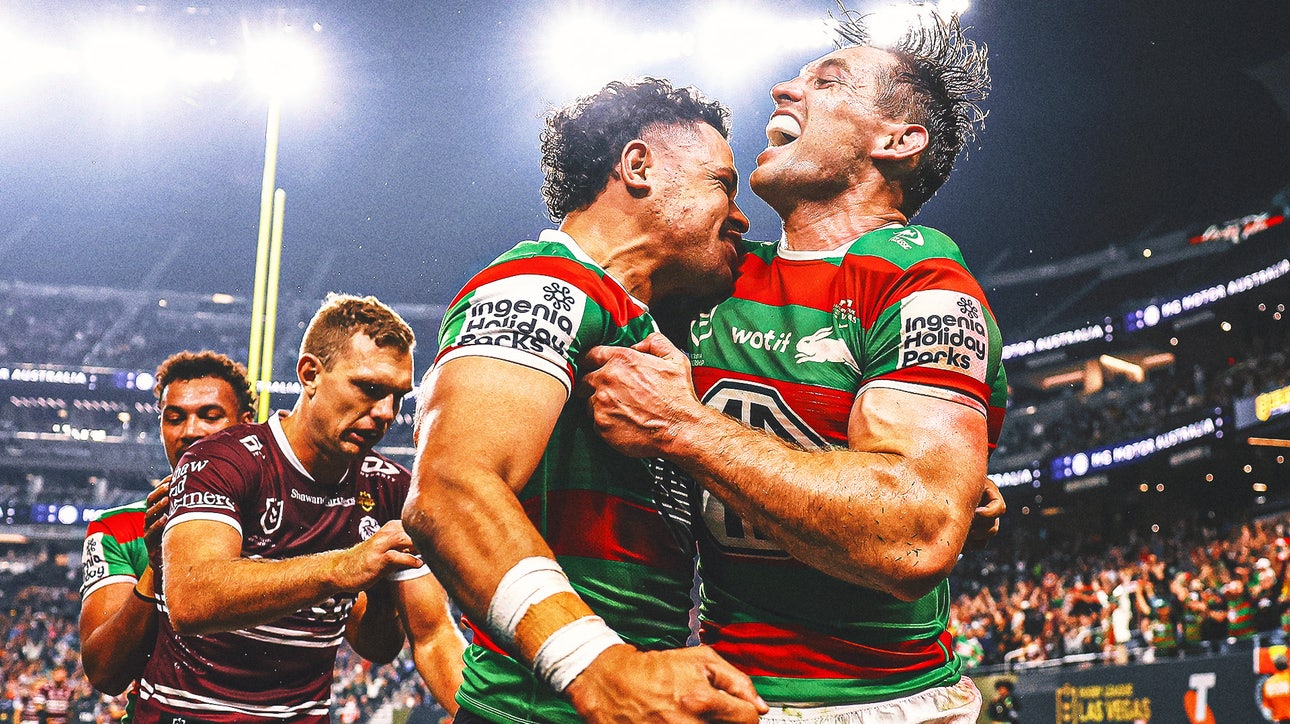
In rugby league the "play the ball" replaces the ruck or maul as the passage of play following a tackle. (Stu Forster / Getty Images)
Rugby League differs from rugby union in the following ways:
  1. There are only 13 players on a team. Six forwards and seven backs. There are no flank forwards in league. Additionally, the forwards wear high numbers on their jerseys (8-13) and the backs sport numbers 1-7.
  2. Each team has six tackles to get as far down the field as it can. If they don't score after the sixth tackle they have to give the opposition the ball. After five tackles, a team will often kick the ball to get good field position. In union a team can play as many phases as it can without making a mistake or being forced out into touch.
  3. After a tackle, the tackler must release the tackled player, who gets up and "plays" rolls the ball behind him with his foot to a teammate (the dummy half) who either runs with it or distributes it to his teammates. The defending team, except the tackler and one other player, must retreat 10 meters behind the tackle. Thus playing the ball quickly after the tackle is the key to the game. The 'play the ball' replaces the 'ruck and maul' common in rugby union.
  4. There is no lineout in league. If the ball goes out a scrum results. Scrums in league are generally not as contested as they are in union, as the teams don't push against each other.
  5. A try is worth four points, a conversion two points, a penalty two points and a field goal one point.
  6. In league, the in-goal area is five meters deep. In union it is 10 meters deep.

 advertisement

 advertisement

Statistical Information provided by: STATS LLC
© 2009 Fox Sports Interactive Media, LLC. All rights reserved.